Wat Chalong
Back to all places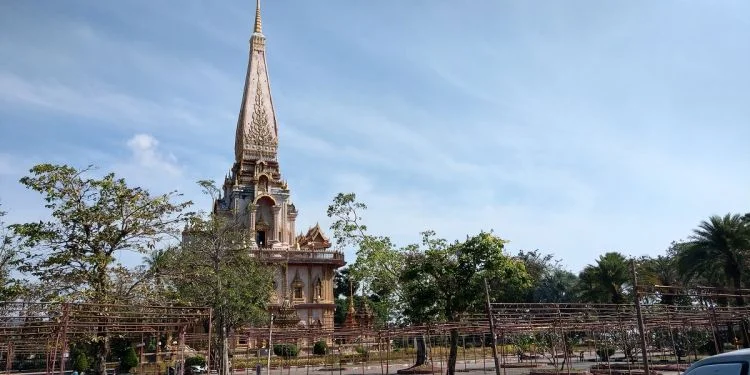
Wat Chalong, or Chalong Temple was built at the beginning on nineteenth century. Its real name is Wat Chaiyathararam. Wat Chalong, the Chalong Temple is the largest of Phuket’s temples, and the most visited.
Locals and many Thai tourists come to pray and pay respects to several revered monks who were the founders of Wat Chalong. Among them Luang Pho Cham and Luang Pho Chuang, 2 monks, who led the citizens of Chalong Sub district fighting against the Chinese rebellion in 1876 and with their knowledge of herbal medicine helped the injured.
The central temple is where most Thai people will make merit by offering lotus flowers and adding a small piece of gold paper to the monk’s statues inside. Once in a while, you will hear loud explosions of firecrackers coming from a brick oven-like construction. That’s another way to make merit, to show gratitude when one of your wishes comes true.
The most recent building on the grounds of Wat Chalong is a 60 meters tall ’Chedi’ sheltering a splinter of bone from Buddha. Walls and ceilings are decorated with beautiful painting illustrating the life of Buddha, as well as many donated golden statues. Wat Chalong Chedi is built on three floors so feel free to climb all the way to the top floor terrace to get a nice bird view on the entire temple grounds. Few more steps will lead you to a glass display where the fragment of bone can be contemplated.
Dress Code and Behavior
As with all Buddhist temples, there is a strict dress code that must always be followed.
Shoes are never allowed inside a temple, so be sure to leave yours outside with all the others.
Women are required to cover their shoulders and wear pants or skirts that extend down to their knees.
Certain level of respect is expected. Speak in a quiet tone within the temple and do not touch the statues or other Buddhist relics.
Wat Chalong is Free Entrance and plenty of Free parking for cars and motorbikes.
Buddhism originated in India in the Sixth century B.C., founded by Prince Siddhartha, who eventually achieved the ultimate goal of enlightenment. After 49 days of meditating under a bodhi tree, he became Buddha, or the “Awakened One.” Buddhism later arrived in Thailand from Sri Lanka. It became the dominant religion in both Thailand and Laos in the Twelfth century. The yellow and orange robes of the monks are very recognizable among modern-day clothing. Many Thais will start their day off by giving offerings to monks who are collecting donations in the streets.
Every man in Thailand is required to become a monk for a period of time before the age of 20. Though the expected time length is about three months, some will stay as little as a day or two. The majority of monks remain for at least a few weeks. Young men do this in order to receive good karma and merit. Living as a monk involves hundreds of rules by which they must abide. Some are pretty basic, such as monks always having to wear a robe, not drinking alcohol or not swimming for fun. They must also follow a long list of stipulations when going out in public. For example, monks cannot laugh or speak loudly.
Monks are normally very friendly, even to foreigners. Some temples have things like monk chats, where tourists can sit down with a monk and talk with them about their lives. As a reminder, the majority of Thais will give up their seats on public transportation for a monk. Tourists should do this as well.
7.84680, 98.33693